AI-Powered Customer Experience: The Future of Retail in Kuwait and UAE
Discover how AI-powered customer experience is transforming retail in Kuwait and the UAE. Learn how intelligent personalization, dynamic pricing, and predictive analytics drive growth.
Introduction: Experience Is the New Competitive Advantage
Retail across Kuwait is undergoing a structural shift. Consumers are no longer comparing prices alone — they are comparing experiences.
Across the broader MENA region, especially in United Arab Emirates and Saudi Arabia, retailers are embedding AI into every customer touchpoint.
The result?
Retail is becoming predictive, personalized, and intelligent.
The brands that win in 2026 will not be the ones with the largest inventory.
They will be the ones with the smartest systems.
Why Traditional Retail Models Are Failing
Historically, retail growth relied on:
Expanding store locations
Increasing advertising budgets
Seasonal discount campaigns
Manual inventory management
This model produces:
Overstock risk
Inconsistent customer experiences
Thin margins
Slow adaptation
AI-powered retail reverses this dynamic.
Instead of reacting to trends, retailers predict them.

What AI-Powered Customer Experience Actually Means
AI in retail goes beyond chatbots.
It integrates into:
Product recommendation engines
Dynamic pricing systems
Inventory forecasting
Customer behavior analytics
Omnichannel personalization
Customer experience becomes data-driven.
1️⃣ Hyper-Personalized Shopping Journeys
AI systems analyze:
Browsing patterns
Purchase history
Time-of-day behavior
Location data
Retailers can then:
Recommend relevant products
Adjust homepage layouts dynamically
Send targeted promotions
Predict repeat purchases
In Kuwait’s growing e-commerce ecosystem, personalization increases:
Conversion rates
Average order value
Customer lifetime value
2️⃣ Intelligent Inventory Forecasting
AI models forecast:
Seasonal demand
Trend acceleration
Regional preferences
Stock depletion timing
Retailers reduce:
Overstock losses
Stockouts
Emergency procurement costs
This is especially critical for expansion into the UAE and Saudi Arabia, where supply chains operate at scale.
3️⃣ Dynamic Pricing Strategies
AI-powered pricing systems can:
Monitor competitor prices
Analyze demand fluctuations
Adjust discounts in real time
Optimize margin targets
Instead of fixed pricing models, retailers operate with intelligent elasticity.
Profitability improves without sacrificing competitiveness.
4️⃣ Omnichannel Integration
Modern consumers interact across:
Websites
Mobile apps
Physical stores
Social platforms
AI integrates these channels into a unified profile.
This enables:
Seamless cross-channel shopping
Consistent product recommendations
Unified loyalty systems
Retailers gain a 360-degree customer view.
5️⃣ AI-Driven Customer Support
AI-powered service systems can:
Answer FAQs instantly
Process returns automatically
Track shipments
Escalate complex issues
Operational costs decline while customer satisfaction increases.
Retail Use Cases in Kuwait
Luxury Retail
AI enables:
Personalized VIP recommendations
Exclusive event targeting
High-value customer segmentation
Luxury buyers expect intelligent service — not generic outreach.
Grocery & FMCG
AI helps:
Predict daily demand
Optimize shelf placement
Reduce food waste
Forecast promotional performance
Margins in FMCG are tight — intelligence protects profitability.
Fashion & Apparel
AI enhances:
Size prediction algorithms
Style recommendations
Seasonal trend forecasting
This reduces return rates and increases customer loyalty.
The UAE and Saudi Arabia Influence
Retail ecosystems in the UAE are highly digitized.
Saudi Arabia’s retail sector is rapidly scaling under national transformation initiatives.
For Kuwaiti retailers competing regionally, AI is no longer experimental — it is expected.
Companies without AI-backed systems risk falling behind.
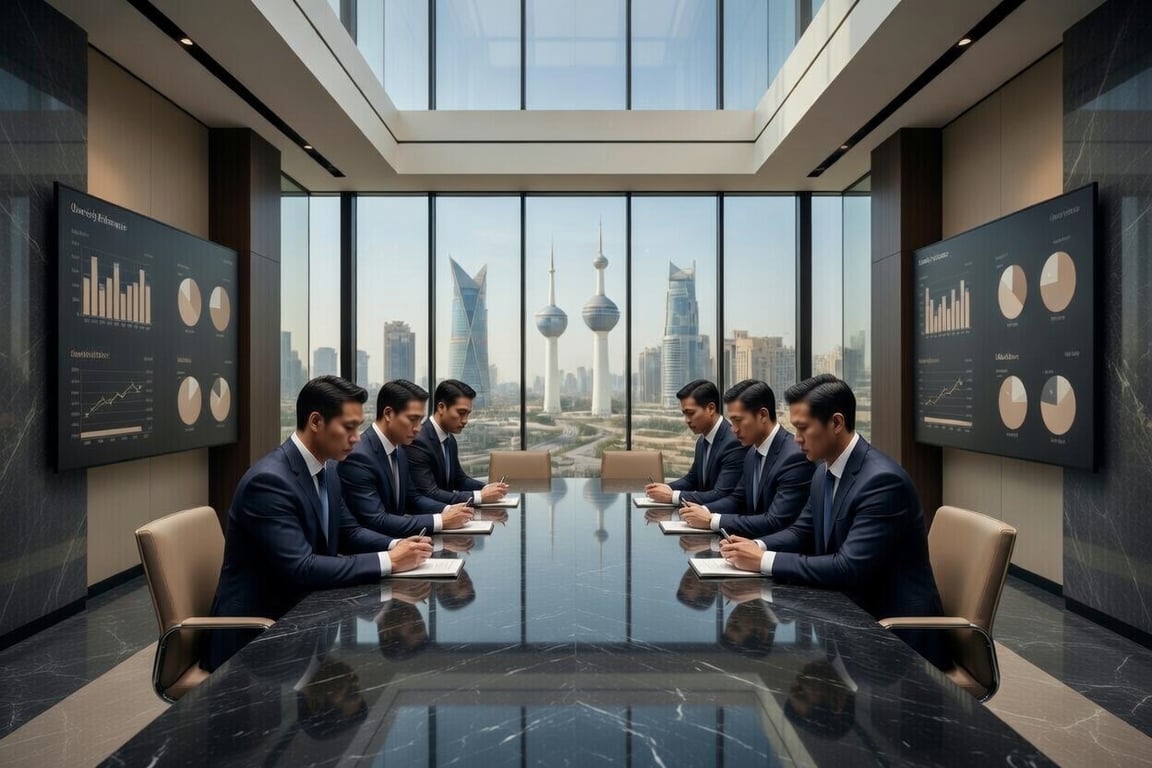
Infrastructure Requirements
AI-powered customer experience requires:
Clean, structured data
Scalable SaaS architecture
Secure cloud environments
Real-time analytics pipelines
Without infrastructure, personalization collapses.
Retail AI must be integrated — not isolated.
ROI of AI in Retail
Retailers deploying AI typically see:
Higher conversion rates
Increased average order value
Reduced inventory costs
Lower operational overhead
Most importantly:
AI compounds.
The more data collected, the smarter the system becomes.
The 2026 Outlook for Retail in Kuwait
By 2026:
AI-driven personalization will be standard
Predictive inventory will replace manual planning
Real-time pricing will dominate e-commerce
Omnichannel AI systems will unify customer journeys
Retailers that build intelligent infrastructure today secure tomorrow’s market share.
Conclusion: Experience Is Engineered
The future of retail in Kuwait, the UAE, and across MENA is not physical vs digital.
It is intelligent vs outdated.
AI-powered customer experience transforms:
Browsing into engagement
Data into insight
Insight into revenue
Retail leaders will not compete on price alone.
They will compete on intelligence.
And intelligence is built through AI systems designed for scale.
Last updated: 2026-03-17
Related posts
- AI-Driven Customer Experience in Kuwaiti Enterprises: Elevating Engagement Across MENA — Discover how Kuwaiti enterprises can transform customer experience using AI-driven systems, predictive analytics, and intelligent automation across MENA.
- Designing AI Frontend Development That Enhances User Experience — Explore AI frontend development strategies for Kuwaiti businesses. Learn how AI systems in Kuwait, UAE, Saudi Arabia, and MENA enhance UX, improve engagement, and…
- The Future of Work in Kuwait: AI, Automation, and Workforce Transformation — Explore how AI and automation are transforming the future of work in Kuwait. Learn how enterprises across MENA are evolving workforce strategies with AI…
- AI-Powered Customer Insights for Kuwaiti Enterprises: Driving Smarter Decisions — Introduction: The Age of Data-Driven Decisions Across Kuwait, businesses are realizing that data is the new currency. With AI-powered customer insights, companies in MENA…